

Being at the intersection of two major streetcar lines has its advantages - and otherwise. The cars are pretty noisy as they go by.


Ikea-d up. New dresser and bookcases.

 There are many things one may find as shocking in one's life but this has to be one of the most impressive:
Someone out there, to be left unnamed at this time, prefers Kathryn Janeway to Jean-Luc Picard and Benjamin Sisko.
I'll let the shock sink in.
Need more time?
Alright, hopefully now you're ready to heed my request.
The source of this outrageous comment lies not in maliciousness but in a lack of understanding. Said individual has not had the pleasure of a full immersion in the universes of Star Trek The Next Generation or Deep Space Nine. As such, I'm putting a call out to my trusty and nerdy readership to submit to me, via comments, the top ten greatest episodes so that I may begin the process of ideological reassignment. If you're familiar with only one series please do a top 10 for that one alone, if you're doubly-skilled try both but keep them separated by series.
I'll then put together a 10 hour marathon of TNG (and DS9 for a later date).
Double-episodes count as 2 episodes unless they cannot be separated (i.e. the first and last episodes of a series such as Encounter at Farpoint and All Good Things...). If you select a double-episode your list gets shorter (a top 9 for instance...).
So please help me out to correct his horrific blunder before it does real harm!
Having been locked in a cage for a month sorting out papers from last semester (and the struggle continues) I thought I'd burst on the scene to update the blog with some songs that have been keeping me motivated and entertained over the last few weeks.
I know usually one song per week/month is usually enough for people to digest when it comes to new music but I think this crop is especially good.
In it we have some psych rock and experimental rock from The Acorn and As The Poets Affirm. To finish the set, however, I'm leaving you with The Weakerthan's cover of The Rheostatics "Bad Time To Be Poor." You don't hear songs like this nowadays on the indie scene or anywhere really and its a welcome sound to hear.
Bon Apetit!

Too much caffeine and a paper on Karl Marx helped produce this photo at dawn.
The white buildings in the distance are Shell Oil tanks.
Not an epic view but at the right time even the mundane can take on a new life.
Without desiring to fall into the trappings of the music snob, I am nevertheless endeavouring to take the time to press upon my noble readers the importance of setting for truly 'experiencing' music!
As a young socially inept person, where computers stood as status symbols among friends, modifications made the difference between hot or not. Imagine it as a low-cash and low self-esteem version of Pimp My Ride. Now, whereas some competed in terms of harddrive capacity or video graphics, my niche - so to speak - was sound. Despite the warnings that SoundBlaster 16 (and equivalents) had cornered the market on what was worth hearing, I was the first on the block to have a SoundBlaster Live! and 4.1 surround system. My favourite memory of this awe-inspiring setup came when, on a dark night in the high-school years, I was seated beside a friend when the silence between us was split asunder by the loud whip-like crack of thunder, followed by an epic roll of rumbling aftershocks that coursed through the room and just as forcibly across the skin and hair on the back of our necks. My poor and somewhat dimwitted friend was completely startled and turned immediately to the window in expectation of a forthcoming flash of lightning to complete the storm that he thought had suddenly besieged our house.
Needless to say, its obvious that there was no such storm, but the point remains, this was a perfect auditory simulation (for a not-as-intense extension of this, pay particular attention to Song 6 during your Arcade Fire session described below). And now, my guide for recreating this holiest of holy events with the best of whats-you-got and the Arcade Fire's Neon Bible.
Jason's 5 Step Method
The perfect musical experience is like a bath. The heat must be hot but not too hot and, equally important, the heat must be evenly distributed all around the body.
| Step #1 | Arrange speakers optimally - which is pointed toward a centered subject. Ensure a subwoofer enters the picture for those important vibrational tones that engage with the body. |
| Step #2 | Find an appropriate temperature. The volume shouldn't hurt your ears but bathe you in enough sound to successfully immerse the body. |
| Step #3 | Find a central place to relax. Comfy chair, extended couch, bed, etc. By minimizing other senses one can heighten their attunement to the sound alone. |
| Step #4 | Allow music to course through and around you. Only good, nay great, music can do this and such music cannot be decided upon in terms of lyrics, vocals or instruments alone. It is what it is. Allow yourself a long and luxurious immersion. One album usually runs 40 minutes to 60 minutes, which is perfect. |
| Step #5 | Mimesis: Extend into the depth of the music, listen for the particular, follow non-dominant melodies. Dive into it as it dives into you. |
Why Neon Bible? Cause I did it and it works. My first exposure to Neon Bible was, unfortunately, not in an optimal environment. I listened to the first single, "Black Mirror" on CBC Radio 3 while doing other work. Volume, distractions and sound quality all played a role in preventing a true appreciation (This is also a plug for CD quality sound and the experience that comes with listening to the whole album versus singles).
Upon following my 5 step method I had a different perspective.
Neon Bible comes across like a combination of early Springsteen and U2's Joshua Tree, evoking with run-through-the-streets style anthems that seem to soar, as if composed of some joyous sound molecules that are given to fly once released from their compact digital form. Fine examples include "Keep the Car Running", "The Well and the Lighthouse", "(Antichrist Television Blues)" and "No Cars Go".
The heavy use of a full-scale church organ throughout the album, but most notably in "Intervention" and "My Body is a Cage" provides a purely electrifying sensation - about the closet one can come to bathing with the electric blow dryer! If you want to know what it'd feel like to feel the full force of that shock without waiting patiently for the last track on the disc, tune in to about 2:10 on "My Body is a Cage"!
The entire album is a stand-out track that deserves to be experienced in a single sitting as immersion. Give 'er a try!
PS. While you're listening to the album and all, check out this recent CBC New piece on how our nervous system functions through sound energy! CBC News
As a quick follow-up to that much-too-serious post for an already-stressful March comes an enchanting three-piece of female talent from Canada's up-and-coming, popular and established songstresses Jenn Grant, Feist and Julie Doiron. Each of these songs have caught my attention and implanted themselves so firmly into my brain that I cannot help but hum and tap my foot while I leaf through the monotonous pages of postmodern mumbojumbo, Marxist economics or Latin American tales of migration.
Julie Doiron's thrumming guitar and cute lyrics ("I woke myself up - to rest my weary head") are completely infectous. Jenn Grant's soft and sensual Dreamer will have you going "ya dre-ma-ah-ah" over and over again and finally, Feist's beat-centric and sultry-spun My Moon My Man closes the set that invites repeat upon repeat!
 |  |  |
| Julie Doiron | Jenn Grant | Leslie Feist |
Take a ten-minute break and enjoy their fine sounds with my mini-playlist below.
I'm somewhat disappointed in myself for slacking off on the blog. While I enjoy adding the new music posts, they are somewhat of a cop-out for the more personal creative enterprises such as my own photos or writings that I had intended to fill these electronic pages.
This post actually came from my comments on a friend's blog (see This Must Be The Place). The issue isn't exactly foreign to me as I've been discoursing (at some length) on it for the past year or so. The event that generated my line of reason was the discovery of the Pickton murder victims in Port Coquitlam, BC and his subsequent trial. To frame the discussion, my perspective comes between two positions that dominate the discourse on 'solving' prostitution. The first and perhaps outwardly more feminist position is that it should be made completely illegal and that a crackdown on male users and pimps will suffice to eliminate prostitution. This view insists upon the moral bankruptcy of prostitution. It also structures the relationship into a solidly dichotomous antagonism between (active) predator and (passive) victim. Perhaps most importantly, in my estimation, is that despite this arguments solid moral principles, it lacks little if any historical, social or political analysis. In this sense, it is the least strategic and most idealistic of the perspectives forwarded.
The alternative and more "liberal" (approaching on "libertarian") perspective is that of outright legalization. This opinion, often espousing the practical models operating in European countries, and seems to operate on an almost completely different plane than the previous one. Whereas the "feminist" approach is based solidly upon moral and ontological evaluations, the "liberal/libertarian" approach utilizes a completely pragmatic logic. Adherents of this position avoid the moral or ontological categories. Prostitution is as neutral a position as baker and the women that engage in it are rational-agents seeking to take advantage of the largely (benign and natural) male demand. Despite its innocent leanings, it clearly adopts a perspective on both men and women and it channels this ideology from liberal-capitalism. Like the "feminist" approach, the pragmatic perspective ignores the historical, social and political web that interpellates prostitute, john and voyeur. This position emphasizes its strategic or pragmatic sensibilities but at the expense of any trajectory. It simply seeks to capitalize (as institutionalize; in the sense of bringing within the domain of capitalism and its norms and values) a 'profession' which is intricately tied to prevailing power relationships.
My position seeks to provide both a strategic and idealistic solution. Here begins a copy of my comments from This Must Be The Place in response to a post citing Rape Relief's denunciation of the legalization of prostitution.
I'm for the legalization of prostitution personally. Unfortunately I do not see any good options put forward by groups such as Rape Relief, etc. Making it completely illegal simply pushes it further underground. Have our marijuana laws and other drugs laws made drug use disappear?
Prostitution as it is now = rampant capitalism with no regulation. Legalizing it will not prevent rampant capitalism but will regulate it.
A better step will be legalization and state-control. No private brothels.
That way it can be properly regulated and plenty of support can be made available for those women who would like to leave the industry.
This method both provides prostitutes with dignity of not being told what they should or shouldn't be doing by self-righteous men & women and eliminating pimps (as individuals or as brothel owners).
I think an equivalent of the Vancouver safe-injection site could be a first step.
Furthermore, (sorry for being so verbose) government legalization would have the benefit of allowing complete criminalization of prostitution outside government channels. Currently, prostitutes are not criminalized and 'johns' are. This makes protection of prostituted women extremely difficult because they actively seek to avoid the police in order to make money in an activity that is illegal. This is the equivalent of charging police to protect drug-dealers although they are mandated to arrest drug users. Obviously, the prostitutes do not want anything to do with the police despite not being criminals per se and this ultimately leads to risks to their lives.
By government legalization, prostitution outside of this channel would be illegal and the women could be arrested. This would be beneficial namely because women operating outside the government system would likely be operating in a state of coercion (pimped). The women could then be offered ways out of the 'business' or work at the government brothel. Again, instead of morally-denouncing women they are offered the dignity of a choice freed of coercion.
Obviously, welfare policy must be modified to prevent abuses (such as those in Europe that insist women engage in prostitution if they cannot find employment elsewhere). Prostitution could be handled strictly as a means to ending it through government assistance.
This approach has the obvious downside of dirtying the hands of government and consequently the public. I'd much rather have that responsibility on my shoulders than the airs of purity that come with evangelical positions of eliminating prostitution with a wave of the (legislative) hand or simple and self-righteous denunciation strategies of certain feminist groups.
 In keeping with my tradition of posting a song every week or so, here's Quadra Island's Mother Mother with their track Polynesia. Mother Mother played Friday night at the Horseshoe and I missed out because I'm too weak and old to go out 3 nights in a row. This song alone would have made it worth it though.
Friend and fellow Smartist Shayne Robinson (check out his print-worthy travel blog www.shayneandjo.com) has pointed me to this lovely site that pairs random Family Circus cartoons with random quotes by everybody's favourite philosopher, Friedrich Nietzsche.


Check it out for a laugh:
http://www.losanjealous.com/nfc/
 Coming out of one of Canada's best indie-rock bands, Cuff the Duke, Wayne Petti was already standing on firm ground for his debut solo effort City Lights Align which will be released on March 13, 2007. Sporting a much softer and folkier side than Cuff the Duke's regular mix of pop, country and rock, Petti nonetheless brings across CtD's most shining asset: his voice and lyrics. The first single from City Lights Align is Moment by Moment which I've posted here.
A slight change I've added to the format of the blog should be visible on the right-side menu. I've stolen a handy-MP3 player gadget from Todd Leskie's Blog. This might help those too lazy to click on the link and open the song in Winamp or whatever. It also provides a handy list of all the songs I've posted so far in one playlist.

So click play on the first track, "Moment by Moment" and listen to one of Canada's best upcoming talents, Wayne Petti.


Broken, torn, and shattered, 2005 had been a year of downturns and failures in many ways. A break-up with a long time girlfriend, a money well wasted vacation to Costa Rica as well as a number of jobless months searching for reasonable (above min. wage) employment in Vancouver. Indeed for about half-a-year it seemed like nothing could go right, that is until I met him in November. That him is my hero, the ace of adjectives, prince of pop references and uh... queen of quirkiness, Grant Lawrence. At first our encounter was limited to an hourly engagement once a week but I soon discovered a giant backlog of his musings and recommendations on music and life through the CBC archives (and later even more Grant through a satellite radio given to me by a friend). Now I was set to be a disciple of Grant and have faithfully followed ever since. Grant led me out of the darkness and into a better and richer world of music and soul and to him I am indebted (with a shout-out to my favourite fruit Apple of course).
 So when Grant Lawrence starts his favourite show of 2006 on Canadian music with Destroyer's 3000 Flowers, and cites "its amazing feedback drenched guitar riff" I couldn't help but agree. This is the kind of off the wall guitar buzz and screeching that one can just lose onself. And in the long months of a Toronto winter, far from where Grant & I met for the first time, this song delivers the best in what pop music can offer: joy.
So sit back, relax and let your cell's dance to Destroyer's 3000 Flowers.
For an introduction to Grant Lawrence start here.


 Its been over a month since I last posted a song on the blog and my guilt has actually kept me from making good on my commitment to spreading the good news of the lord, indie music. Part of the problem has also been that I scooped up a lot of good cheer over the holidays including 5 new albums (some of those which made my top 10 of 2006 had not been purchased and obviously earned the honour, including Matt Mays' excellent When the Angels Make Contact album as well as Pink Mountaintops Axis of Evol. Moreover, a free week or two of downloading from my favourite bittorrent site (the best way to listen to new music) has given me a whole new library of tunes to sort through and its been tough to find the one song that deserves a blog post out of the bevy of great picks and friends recommendations I've heard.
 However, this post is about picking and not indecisive meanderings (save those for the philosophical posts) and the pick is The Be Good Tanyas's "Ootischenia". Besides the obvious qualities of the song, most notably lead singer Frazey Ford's drawl and the comforting old-timey rhythm, the lyrics tell a story about a small Doukhobor community in the interior of British Columbia. The song, which Ford describes as a reminiscence of life growing up in the town of Ootischenia (near Castlegar), feels like a warm embrace which I wanted to send out to all friends and family in the little town of Kelowna (OK not so little) no matter whether they've been scattered (to Ulsan, Vancouver, Toronto, etc.) or if they're still making life work in that odd little city-on-the-lake. So sit back, relax and drift away to The Be Good Tanyas' Ootischenia.
Otherwise, enjoy!
Top Concerts:
 Immaculate Machine (Railway Club, Vancouver)
Top Movies:
 Casino Royale
Top Cities Visited:
 Prague, Czech Repubic
Top Songs*:
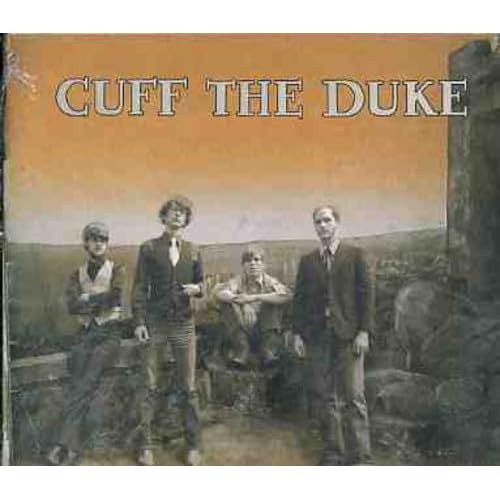 No Heat (Cuff the Duke)
*Some songs on 2005 albums but did not *debut* separately or were not *discovered* by me until 2006.
Top Meals:
 Poutine (Brados, Vancouver)
Top Events:
 Accepted to York University's Graduate Program
 Sleeman's Honey Brown
 The Brothers Karamazov (Dostoevsky)
 The Wire
 Adorno's Negativity
 Digital SLR Camera (Canon Rebel XT)
Stay tuned for a top 5 (or 10) list of Best Photos Taken of 2006 (likely a "clip-show" of the best photos posted on my travel blog)!
Let me know what you think of the lists!


